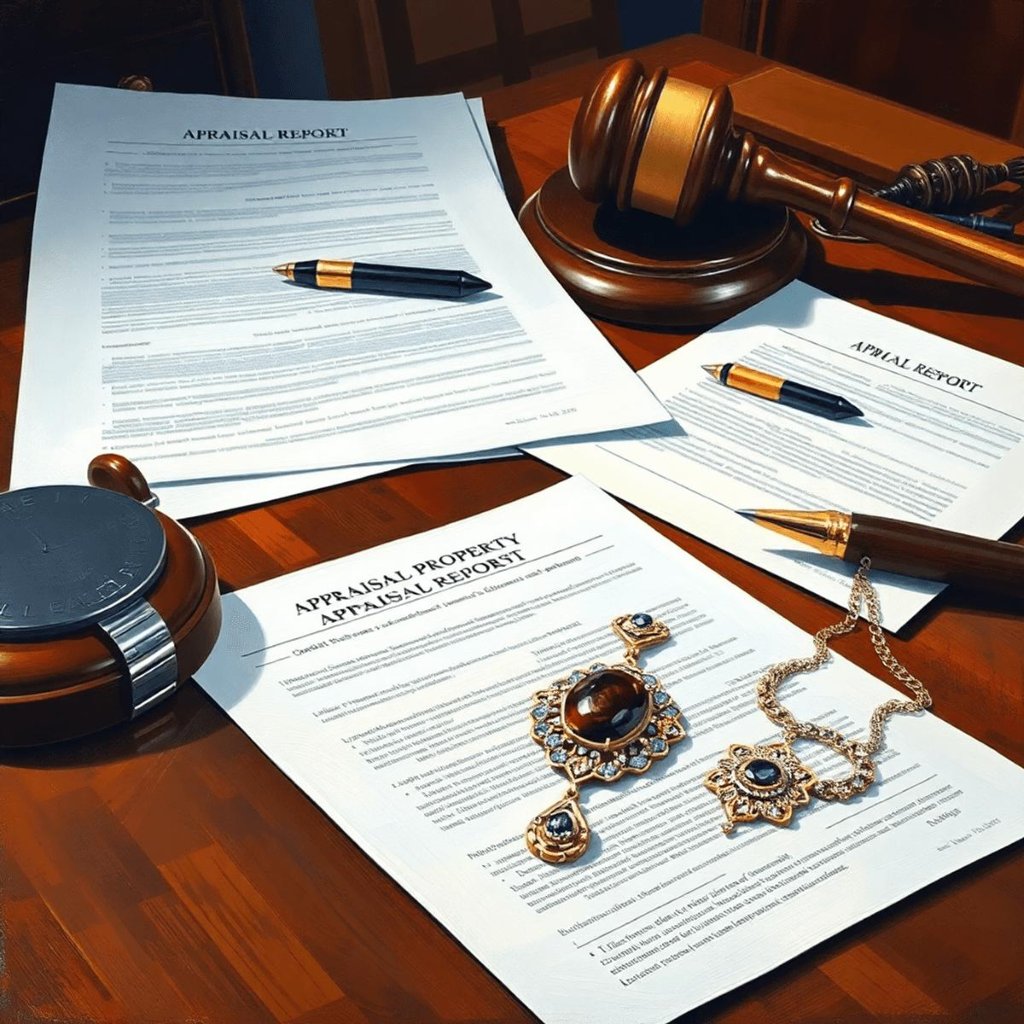
Overview
Inherited jewelry is among the most emotionally and financially complex assets in an estate. Unlike financial accounts or real property, jewelry involves subjective value, specialized technical knowledge, beneficiary sentiment, and significant variation in what different appraisal standards will conclude.
This guide is intended for attorneys, executors, trust administrators, and family members navigating a jewelry estate — providing a practical framework for moving from raw inventory to documented, valued, and appropriately distributed assets.
Why Jewelry Requires Specialized Review
Most estate professionals are not equipped to evaluate jewelry independently. Unlike securities or real property, there are no readily accessible market databases for fine jewelry. Conditions, treatments, origin documentation, and hallmarking all affect value in ways that require gemological training to assess.
Common errors in estates include:
- Treating all gold jewelry as equivalent by weight regardless of craftsmanship, age, or signed status
- Ignoring potential lab-grown status of diamonds in collections assembled since 2015
- Accepting prior appraisals without confirming their purpose and currency
- Distributing pieces before documentation is complete, creating disputes among beneficiaries
Key Steps in Estate Jewelry Management
Step 1: Secure and inventory. Before any appraisal, create a photographic inventory of all jewelry. Do not clean, separate, or describe pieces before professional review.
Step 2: Engage a qualified independent appraiser. For estate tax purposes, the appraiser must meet IRS qualification standards (Section 170(f)(11) and related regulations). GIA-credentialed appraisers with estate experience are appropriate.
Step 3: Determine purpose. Are you appraising for estate tax, insurance scheduling, equitable distribution, or sale preparation? Each purpose requires a different valuation methodology.
Step 4: Obtain laboratory reports for significant stones. Any stone that is significant to the estate — whether by size, apparent quality, or family significance — should be identified and, if not already documented, evaluated for laboratory reporting.
Step 5: Prepare and distribute. Only after documentation is complete should distribution, insurance, or sale decisions be made.
Documentation Requirements
For estate tax purposes (IRS Form 706), the IRS requires a qualified appraisal conducted by a qualified appraiser. For items valued at more than $5,000 individually, a separate line item is required. For collections aggregating more than $10,000, a comprehensive appraisal with individual item description is expected.
For equitable distribution, fair market value appraisals are appropriate. For insurance scheduling of retained pieces, insurance replacement value appraisals are required. These are different documents — estates often need both.
Risks and Misunderstandings
Assuming jewelry has low value. Inherited collections frequently contain pieces of significant market value that are not recognized by families or general estate sale companies. Signed pieces, gem-quality stones, and pre-war fine jewelry are routinely undervalued by non-specialist evaluators.
Distributing before documenting. Distribution before appraisal creates liability for executors and disputes among beneficiaries. Equitable distribution requires equal information — which requires documentation first.
Using retail replacement values for estate tax. This will overstate estate value and may result in excess tax. Fair market value is the correct standard for estate tax.
Relying on estate sale companies for valuation. Estate sale operators are skilled at liquidation logistics but are not qualified appraisers under IRS standards.
GSBH Advisory Perspective
GSBH provides estate jewelry review services tailored to the specific needs of fiduciary professionals, estates of any size, and families managing the transition of jewelry assets. Our services include inventory photography, gemological assessment, purpose-appropriate appraisal documentation, and ongoing advisory for distribution, insurance, or sale preparation.
We understand that estate jewelry review involves not only financial assessment but also family dynamics and emotional weight. Our approach is respectful, discreet, and focused on providing the documentation clarity that protects all parties.
Recommended Next Steps
1. Secure all jewelry before any distribution, cleaning, or sale.
2. Engage an independent certified appraiser — not a dealer or estate sale company.
3. Clarify the purpose of each appraisal before commissioning it.
4. Obtain laboratory documentation for significant stones.
5. Coordinate with estate counsel to ensure appraisal documentation meets IRS and state requirements.
Contact GSBH for a consultation on estate jewelry review services.
Next Steps
Ready to Discuss Your Situation?
Our team of GIA-trained specialists is available for private consultations on appraisal, authentication, estate review, and advisory matters.